

Feel the historic Marbella vibe, Puente Romano
Puente Romano Marbella is a luxury resort located in Marbella, Spain. Founded in 1979, the resort has a rich history and has been a popular destination for tourists and celebrities alike for over four decades. Puente Romano Marbella is known for its luxury amenities, beautiful architecture, and idyllic location on the Mediterranean coast. The resort is set in the heart of Marbella, surrounded by lush gardens and the beautiful Andalusian countryside.
From its beginnings as a small hotel to its current status as a world-renowned resort, Puente Romano Marbella has a rich and fascinating history. In this blog, we will explore the history of this iconic resort and discover how it has become one of the most sought-after destinations in Marbella.
The bridge that gave Puente Romano its name
The name Puente Romano translates as “Roman bridge”. It refers to the old stone bridge that still stands within the grounds of the resort.
The bridge once crossed the Arroyo de Nagüeles, a stream that has since disappeared from the landscape. Although it has been repaired and altered over the centuries, historians generally believe that its basic structure is probably Roman in origin and that it formed part of the area’s ancient road network.
During Roman rule, roads running along the coast connected settlements throughout southern Hispania. These routes supported trade, military movement and communication between important coastal communities.
The bridge survived long after the stream and road it served had changed or vanished. When the surrounding land was developed many centuries later, it was preserved as the central feature of the new complex. It would eventually give both the hotel and the wider residential area their name.
Marbella before Puente Romano
For much of its history, Marbella was a relatively small Andalusian town supported by agriculture, fishing and local industry. That began to change during the middle of the twentieth century.
Marbella’s mild climate and Mediterranean setting started attracting wealthy visitors from across Europe. The opening of the Marbella Club during the 1950s played an important role in establishing the town as an international destination.
Prince Alfonso von Hohenlohe, who helped develop the Marbella Club, was one of the central figures in this transformation. His vision of relaxed Mediterranean luxury attracted aristocrats, actors, musicians and business leaders to the Costa del Sol.
As Marbella’s international reputation grew, development gradually extended westwards from the town centre. The coastal area between Marbella and Puerto Banús became increasingly desirable and would later become known as the Golden Mile.
The creation of an Andalusian village
The modern history of Puente Romano began during the 1970s. Rather than starting as a traditional hotel, the development was originally conceived as an exclusive residential complex.
Architect Melvin Villarroel designed the project in the style of a traditional Andalusian village. Instead of constructing one large building, he created a collection of low-rise properties surrounded by courtyards, gardens, narrow pathways and small squares.
The first apartments were constructed during the mid-1970s. Their whitewashed walls, terracotta roofs and flower-filled surroundings gave the development a character that differed greatly from the larger hotels and apartment towers appearing elsewhere on the Costa del Sol.
The historic bridge was incorporated into the landscape rather than removed. It became a focal point around which the gardens, paths and public spaces were arranged.
This design established an architectural identity that would remain central to Puente Romano throughout its later development.
From residential complex to luxury hotel
The project entered a new phase in 1979 when businessman Mouaffak Al Midani acquired much of the complex and transformed it into a luxury hotel.
This moment is generally regarded as the official beginning of Puente Romano as a resort. The original apartments were adapted into hotel accommodation while the village-style layout and Andalusian architecture were preserved.
Only two years after its transformation, Puente Romano became a member of The Leading Hotels of the World. This helped establish its international reputation and placed it among a collection of prominent independent luxury hotels.
The resort’s development came at an important moment in Marbella’s history. During the late 1970s and 1980s, the town was becoming increasingly popular with international visitors. Puente Romano contributed to this growth while benefiting from Marbella’s emerging reputation for glamour and exclusivity.
The beginning of a tennis legacy
The Puente Romano Tennis Club was inaugurated in 1979, the same year the hotel opened. Tennis champion Björn Borg became its first manager, connecting the new resort with one of the most famous figures in international sport.
In 1980, the hotel hosted the wedding of Borg and Romanian tennis player Mariana Simionescu. The event became one of the first major international occasions associated with Puente Romano.
Manolo Santana took over the management of the club in 1983 and remained in the role until 1998. Under his leadership, the venue developed into an important destination for professional and recreational tennis.
In 1988, the club hosted a Davis Cup tie between Spain and Mexico. Its central court later became a setting for concerts and cultural events, beginning with a performance by Spanish soprano Montserrat Caballé in 1992.
These events helped turn Puente Romano into more than a hotel. It became a recognised social, sporting and cultural venue within Marbella.
Expansion during the 1980s and 1990s
The wider Puente Romano area continued to grow during the following decades.
A second residential phase was completed during the 1980s, while Marina Puente Romano was developed beside the hotel during the early 1990s. The marina development introduced several distinct residential sections, including the Andalusian, Persian and Japanese gardens.
Despite this expansion, the developments generally retained the low-rise architecture, landscaped surroundings and pedestrian pathways associated with the original project.
Puente Romano’s reputation also grew through its connection with prominent international visitors. Royal families, actors, musicians, athletes and business figures stayed at the hotel or attended its events, reinforcing Marbella’s image as a meeting place for the international jet set.
A new chapter under the Shamoon family
Puente Romano entered another important chapter in 1995 when it was acquired by the Shamoon family.
The new ownership began a period of investment and renovation intended to modernise the property while protecting its original architectural character. Existing buildings were refurbished and the resort continued to evolve, but the central concept of an Andalusian village remained intact.
This balance between preservation and development became an important part of Puente Romano’s identity. Rather than replacing its original layout, later changes were incorporated into the gardens, squares and low-rise structures created during the 1970s.
A landmark in Marbella’s history
The development of Puente Romano reflects the wider transformation of Marbella during the second half of the twentieth century.
The town changed from a modest coastal community into an international destination, while Puente Romano developed from a residential project into one of the Golden Mile’s most recognisable landmarks.
Its history is preserved not only in photographs and famous events, but also in its physical design. The original village-style architecture remains visible in its whitewashed buildings, tiled roofs, courtyards and winding paths.
At the centre of it all stands the bridge that gave Puente Romano its name. Although the landscape around it has changed dramatically, the bridge continues to connect the site’s ancient past with Marbella’s modern history.
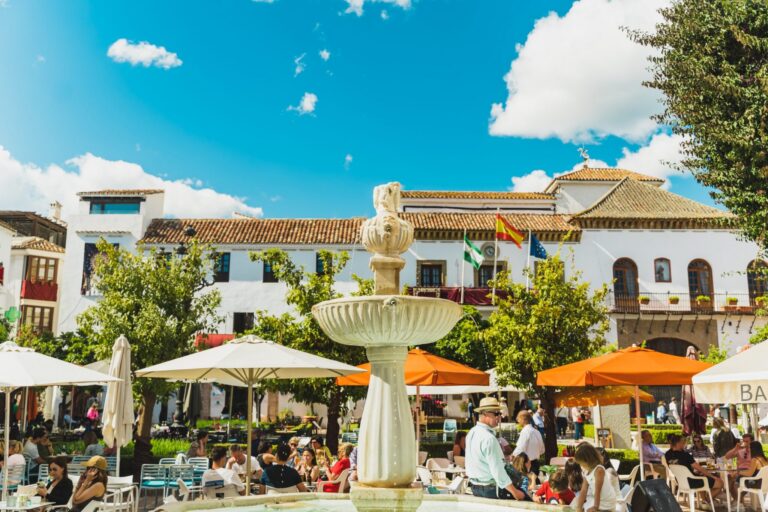
Marbella Old Town, the Guide 2026
Visiting Marbella Old Town is a must-do activity for anyone who wants to explore the city beyond its luxurious port of Puerto Banús and exclusive beach clubs. The old town is the prettiest and

Visit the charming Village of Istan: a Guide to history, culture, and nature
Nestled in the mountains just a short drive from Marbella, the village of Istan is a charming white village that offers a glimpse into the rich history, culture, and natural beauty of the Andalusian
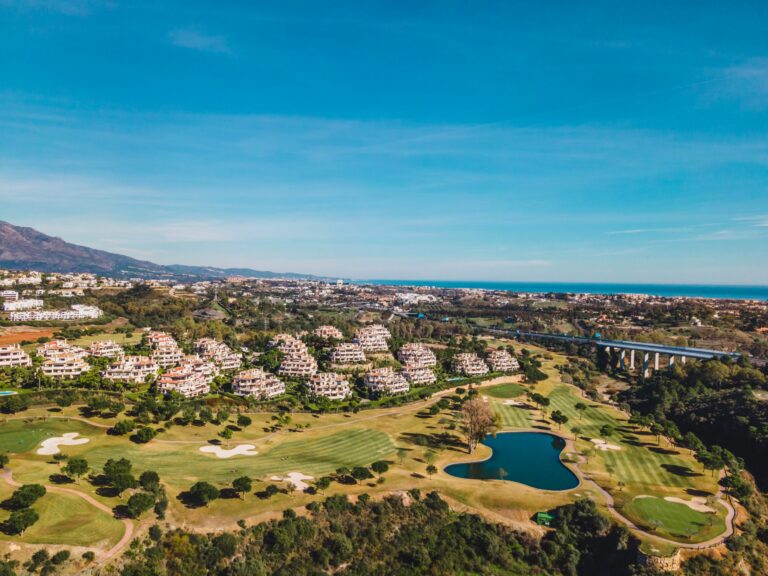
San pedro de Alcántara: a hidden gem in andalusia
San Pedro de Alcántara is a charming town located in the heart of the Costa del Sol in southern Spain. It offers visitors a unique blend of traditional Spanish culture, modern amenities, and stunning
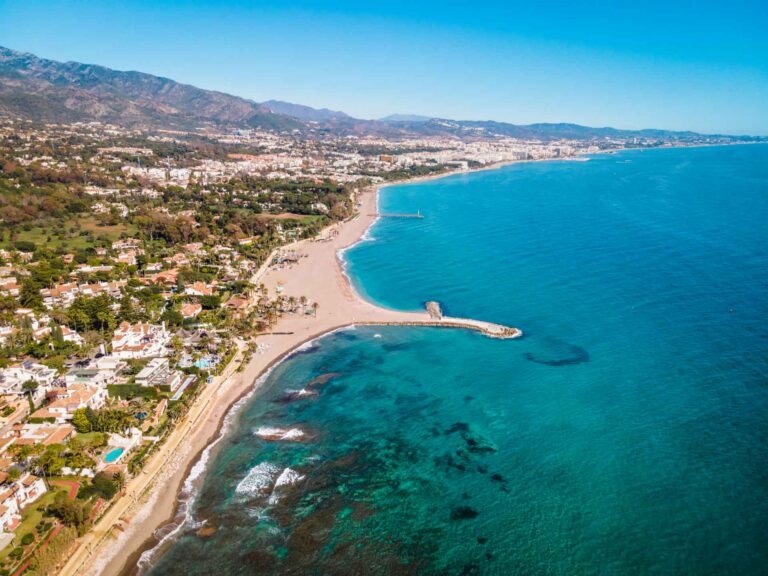
Discovering the rich history, natural beauty, and delicious cuisine of Ronda
Once a year we make a trip to Ronda. In this blog we tell why it's worth a visit! Ronda is a city near Marbella, about 1 hour driving. It is situated on a

What should you take with you in the car in Spain?
Driving is an essential aspect, but it comes with its risks and challenges. Whether you are driving for leisure or commuting to work, it is crucial to ensure that you have all the necessary
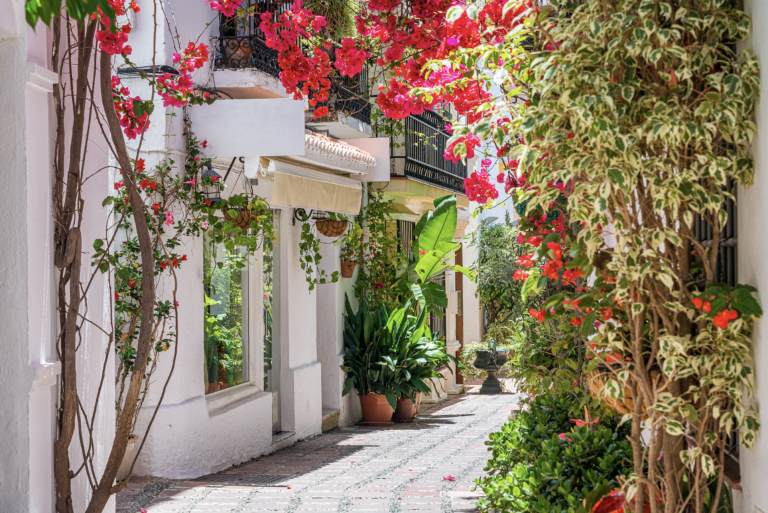
”The pink flowers”, Bougainvillea flowers in Marbella Old Town
If you've ever visited Marbella in the summer months, you may have noticed the vibrant, colorful flowers that seem to be everywhere in the city's old town. One of the most eye-catching of these
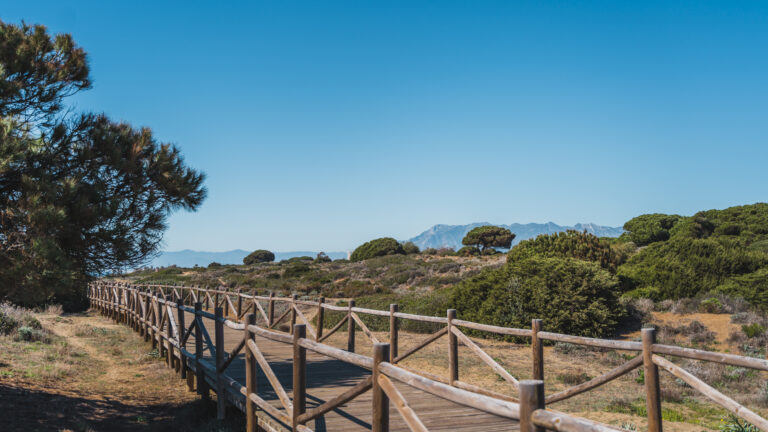
Cabopino beach – a unique experience on the Costa del sol
In this post, we want to share with you our experience visiting Cabopino Beach in East of Marbella. This hidden gem is a stunning location with crystal-clear waters, soft golden sand, and surrounded by
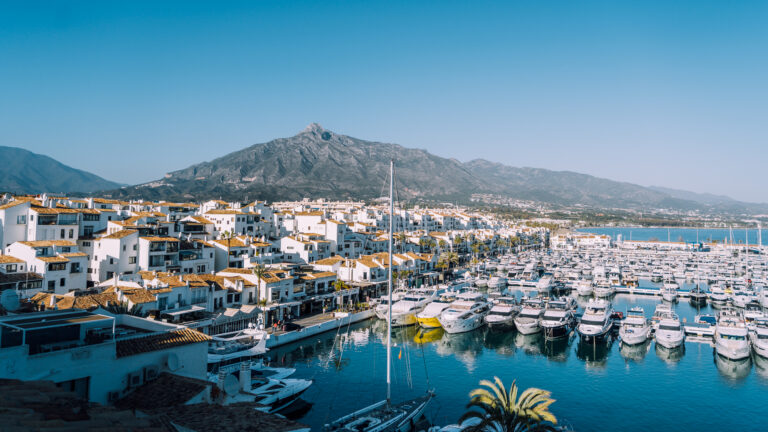
The history of Puerto Banús
In this blog, we will take a look at the history of Puerto Banus, from its founding to its present-day status as one of the most sought-after vacation destinations in Spain. Puerto Banus is